Roof, Windows, and Water-Intrusion Checklist for Pinecrest and Kendall Sellers
Roof, Windows, and Water-Intrusion Checklist for Pinecrest and Kendall Sellers
A real roof and windows checklist before listing a Miami home has less to do with making the property look busy and more to do with making it feel believable. In Pinecrest and Kendall, buyers notice three things faster than many sellers expect: whether the openings look storm-ready, whether the roof story sounds clean, and whether any past water issue is already organized before someone asks about it.
That matters because Joanna's seller process is built around preparation before launch, not apology after the fact. On her Pinecrest seller page, she frames the work as micro-neighborhood analysis, pricing, preparation, staging, photography, and then launch. In other words, the right question is not "What can I freshen up?" It is "What can break buyer trust before the first strong offer ever shows up?"
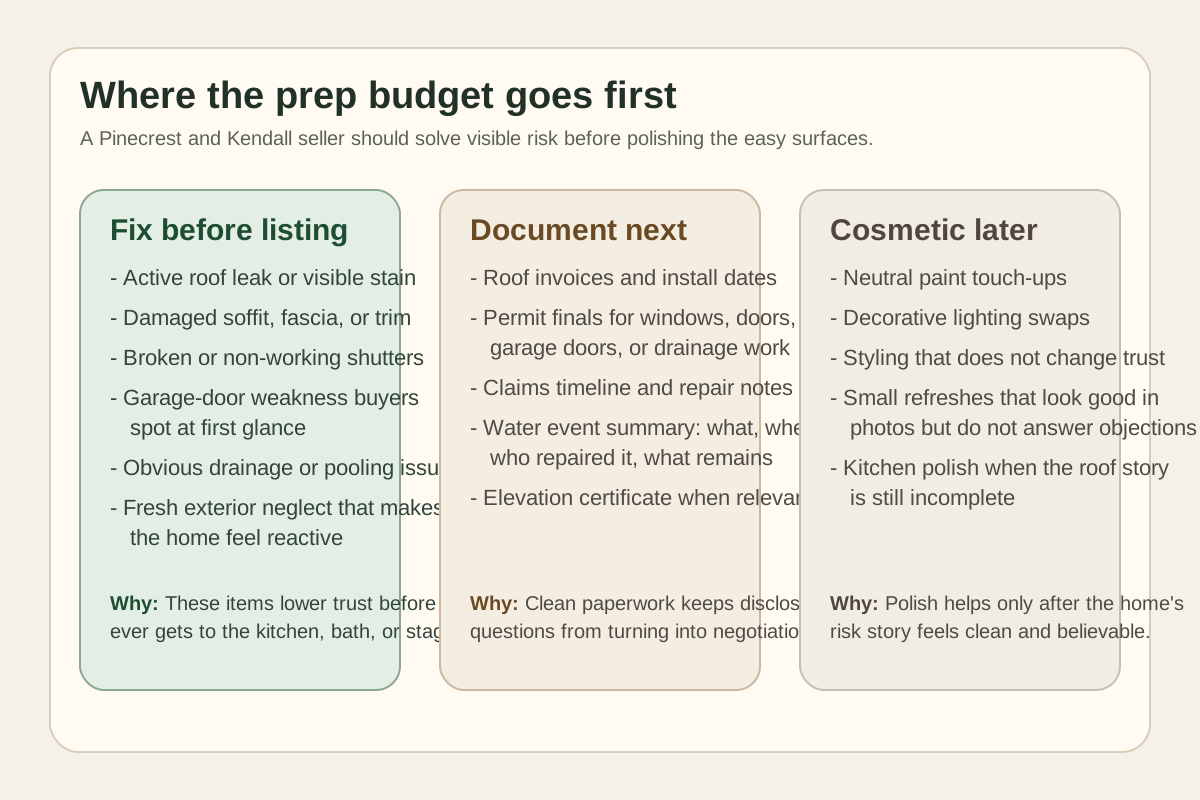
The smartest pre-listing spend usually follows a simple order: solve visible risk first, organize the paperwork second, and leave lower-stakes cosmetics for last.
Why this checklist matters before a South Florida listing
Joanna's published Pinecrest home upgrades guide makes the buyer psychology clear: many current Pinecrest buyers are time-poor, not looking for a project, and willing to pay more for a move-in-ready experience that removes friction. That does not mean every house needs a giant renovation budget. It does mean buyers are quick to discount homes that feel unresolved in the categories they read as risk.
Those categories are especially visible in South Florida. Miami-Dade's Prepare Windows and Doors guidance says windows and doors should be protected with county-approved shutters or 5/8-inch plywood, that tape does not prevent glass from breaking, and that impact-resistant glass can help reduce insurance costs. The same page tells owners to reinforce garage doors and tracks or replace them with a hurricane-tested door. Buyers may not quote that guidance line by line, but they absolutely shop with the same concerns in mind.
Timing sharpens the issue. Joanna's best time to sell in 33156 guide says July and August are the slowest part of the Pinecrest selling calendar and that summer showings can run 30 to 40 percent below peak-season activity. When the buyer pool is thinner, condition questions carry more weight because fewer people are available to overlook them.
So the purpose of this checklist is not to turn every seller into a contractor. It is to help you keep the launch conversation in the right order:
- What will a buyer notice immediately?
- What will a disclosure form or inspection process force you to address anyway?
- What is truly worth fixing before photos?
- What simply needs clear documentation and calm explanation?
What buyers notice before they trust the cosmetics
The hardest truth in this category is simple: buyers do not experience your property in the order you wish they would. They may appreciate the new fixtures, styling, and neutral paint, but visible condition issues often get there first.
Joanna's sold Kendall example at 9740 SW 120th Street is a useful reminder. Her sale story says the launch highlighted the updated kitchen and impact windows, and that the home went under contract within 10 days. That is not proof that windows alone create a fast sale. It is evidence that resilience features can become part of the lead story when they are already done and easy to understand.
The Pinecrest sold example at 10524 SW 60th Avenue points in the same direction. The property features list included impact windows, updated and renovated condition, and the sale story centered the lot, staging, and photography. Again, the lesson is not "one upgrade equals one outcome." The lesson is that strong launches tend to work when the condition story and the marketing story support each other instead of fighting.
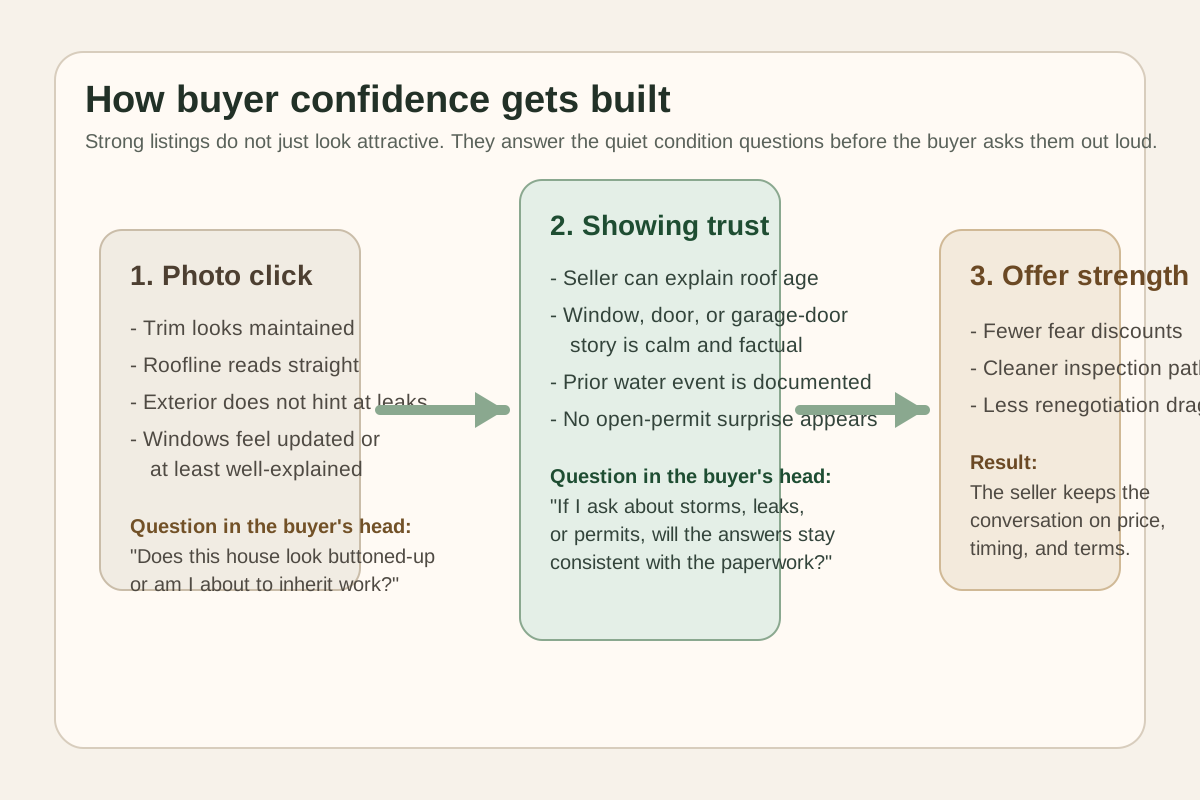 Buyer confidence usually builds in sequence: first the home looks cared for, then the answers stay consistent, and only then do pricing and terms become the main conversation.
For most Pinecrest and Kendall homes, the early trust signals are predictable:
- roofline, soffits, fascia, and trim that do not suggest deferred maintenance;
- windows, doors, and garage-door openings that feel updated, functional, or at least well-accounted-for;
- exterior staining, drainage marks, or repair scars that are either absent or easy to explain;
- and landscaping that reads intentional, not storm-vulnerable.
This is also where sellers can waste money. If an exterior issue quietly tells the buyer "there may be more behind this," new bar stools or a powder-room refresh will not solve the deeper problem. Joanna's upgrades article says as much in another form: if the home still needs major systems work, cosmetic spending can be the wrong first move.
The documents to pull before photos and showings
The paperwork side of this topic matters because buyers often move from visual questions to diligence questions very quickly. Miami-Dade's public records and permit page says building permits and plans, certificates of occupancy and use, code-compliance items, product approvals, and zoning records can all be searched online for free. That is one of the most practical starting points in this whole process.
If you are preparing to list, the most useful packet is usually a short one:
- roof age or install date, if you know it;
- invoices or warranty details for windows, doors, or garage-door work;
- permit finals for visible upgrades a buyer is likely to ask about;
- a simple claims timeline if the property has prior leak or water history;
- and any flood-zone or elevation paperwork already in your records.
The broader disclosure framework supports that approach. The Florida Realtors seller disclosure form asks about past or present water intrusion, drainage or flooding problems, whether the property is in a special flood hazard area, whether flood insurance is required, and whether an elevation certificate exists. It also asks whether the roof is structurally sound and free of leaks, the roof's age, whether it leaked during ownership, and whether roof-system work has been done.
That means this is not just about being organized for your own benefit. It is about knowing which subjects are likely to come back later no matter how beautiful the listing looks on launch day.
For more general transaction prep, Joanna's published seller records checklist is the better broader companion. This article is narrower on purpose. It is the part of the file that most directly affects buyer confidence during storm season, inspection prep, and disclosure conversations.
When impact windows move ahead of cosmetic projects
Impact windows are important enough in South Florida that sellers sometimes overcorrect and assume they should always get the entire budget. The better answer is more specific.
Joanna's upgrades guide treats impact windows and doors as one of the strongest pre-listing improvements because storm-protection objections fall when the glass is already done. Miami-Dade's guidance supports the logic from the public-safety side: impact-resistant glass has improved enough to withstand Category 5 wind conditions and can help reduce insurance costs.
So when should impact windows move ahead of cosmetic work?
They usually move up the list when:
- the home still depends on a clumsy shutter story that buyers will read as inconvenience;
- the property sits on a corridor where quieter interior experience matters;
- the exterior architecture would look materially cleaner with updated openings;
- or your current launch plan depends on presenting the home as easy, refined, and low-friction rather than project-ready.
They move down the list when another unresolved issue is louder. If the roof story is muddy, the soffits look tired, active leaks remain unexplained, or a permit trail is incomplete, impact windows may still be a good long-term upgrade without being the right immediate pre-listing spend.
The same logic applies to cosmetic work. Beautiful staging and fresh paint help most launches. But if a buyer is likely to leave the showing talking about the roof, the garage door, or old water damage instead of the furnishings, the money probably belonged somewhere else first.
How to explain prior water intrusion without creating new anxiety
This is the category that makes many sellers nervous because they assume every prior incident has to become a dramatic confession. That is not the right frame. The better frame is accuracy plus context.
The disclosure form distinguishes between broad water-intrusion and flooding questions, but buyers often think about them as one trust test. If there was a roof leak, a drainage issue, a repair after a storm event, or an insurance claim connected to water, the goal is not to bury it in vague language. The goal is to explain it clearly enough that the buyer does not start imagining a worse story than the truth.
A calm explanation usually has four parts:
- what happened,
- when it happened,
- who evaluated or repaired it,
- and what supporting paperwork still exists.
That last part is where many sellers either gain or lose leverage. The Florida Realtors form also asks about homeowner-insurance claims, improvements made without necessary permits, and active permits not closed by final inspection. Once that paperwork side is weak, even a repaired issue can start feeling bigger than it is.
Flood-zone context matters too. Miami-Dade's Elevation Certificates page says these certificates are required for new construction and substantial improvements, and it explains that if a flood-zone house sits below the required elevation, the 50 percent rule can come into play when damage or improvements exceed half the market value. That does not mean every seller is walking into a raise-the-house scenario. It does mean major water-related history and major renovation plans should be discussed with more care than "we updated a few things."
In practice, buyers are usually more comfortable with a repaired issue that is documented than with a house whose answers drift from one conversation to the next.
A simple fix, disclose, or price-around framework
The cleanest way to make decisions before launch is to stop sorting issues by embarrassment level and start sorting them by negotiation impact.
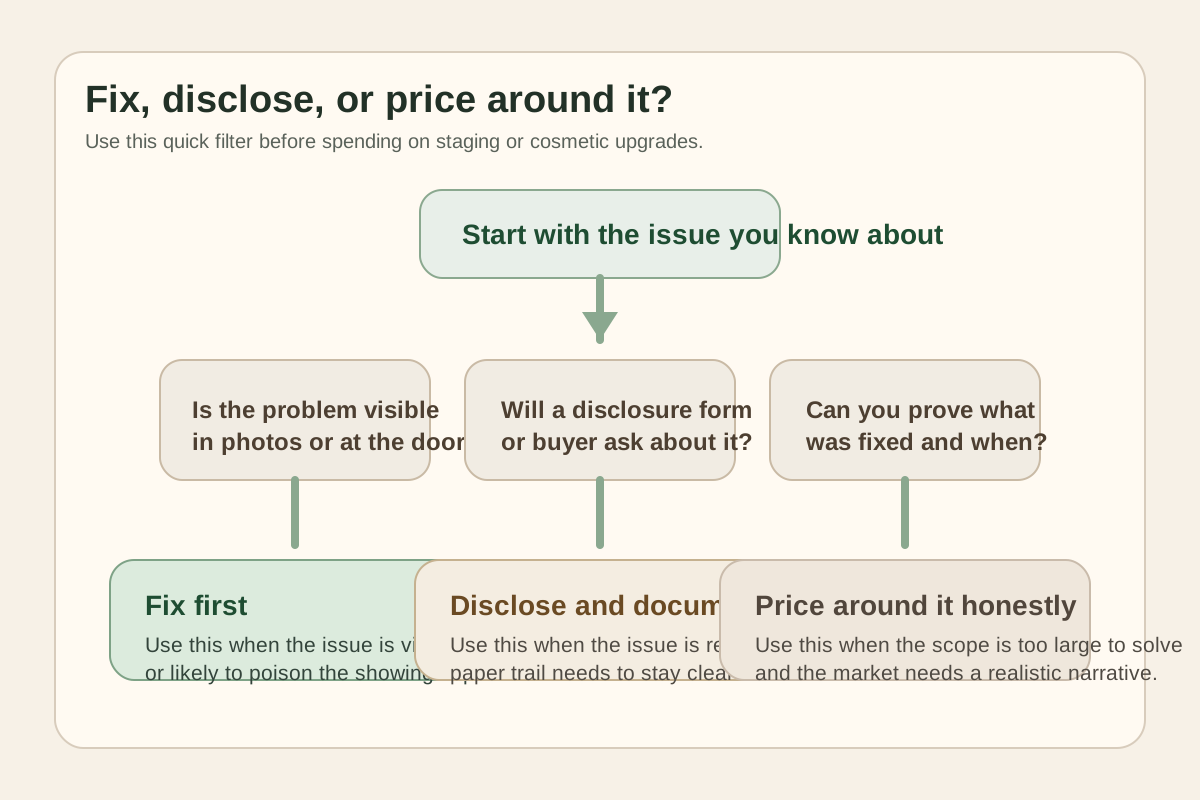 Not every issue demands the same response. The strongest sellers decide early whether an item needs a repair plan, a documentation plan, or a realistic pricing adjustment.
Use this quick framework:
| Situation | Best first move | Why |
|---|---|---|
| Active roof leak, visible staining, or exterior deterioration that shows in photos | Fix first | The buyer sees it before they trust anything else you say |
| Resolved water event with invoices, dates, and consistent repair notes | Disclose and document | A clean paper trail usually protects trust better than a vague attempt to "downplay" it |
| Older roof or opening system that is serviceable but not premium | Price around it honestly | The market can absorb age more easily than it absorbs denial |
| Open permits or unclear permit history on visible upgrades | Resolve or at least clarify before launch | Permit anxiety tends to expand once buyers think other shortcuts may exist |
| Cosmetic issue with no real condition signal behind it | Handle after the risk items, if budget allows | Polish helps most after the home's structural and disclosure story feels stable |
This is also where Joanna's process becomes useful. Her seller workflow is not just about marketing reach. It is about sequencing decisions so you are not spending luxury-level prep dollars in the wrong order. Sometimes the right move is a repair. Sometimes it is a document pull. Sometimes it is simply accepting that a house should be priced as a well-located property with known tradeoffs rather than as a flawless turnkey product.
If you want a next step, use Joanna's Insights hub to compare this checklist against her broader seller guidance, then bring your actual file to the strategy conversation. A roof date, permit search, window story, and water-history summary will do more for that meeting than another mood board ever will.
This article is educational real-estate commentary, not legal, tax, insurance, or contractor advice. Condition issues, flood context, permits, and disclosure obligations vary by property, so confirm the details that apply to your home with the appropriate professionals before you rely on them in a sale.
Selling in ?
Get a free valuation or explore seller services in your area.