Pinecrest Kendall Housing Data Study for Sellers
Pinecrest Kendall Housing Data Study for Sellers
This Pinecrest Kendall housing data study is for the homeowner or buyer who wants a sharper answer than "Pinecrest is more expensive" or "Kendall is more practical." I pulled public-record parcel characteristics for single-family homes in ZIPs 33156 and 33176, then paired those records with Census owner-value context so the comparison is specific enough for sellers, buyers, relocation writers, and neighborhood newsletters to cite.
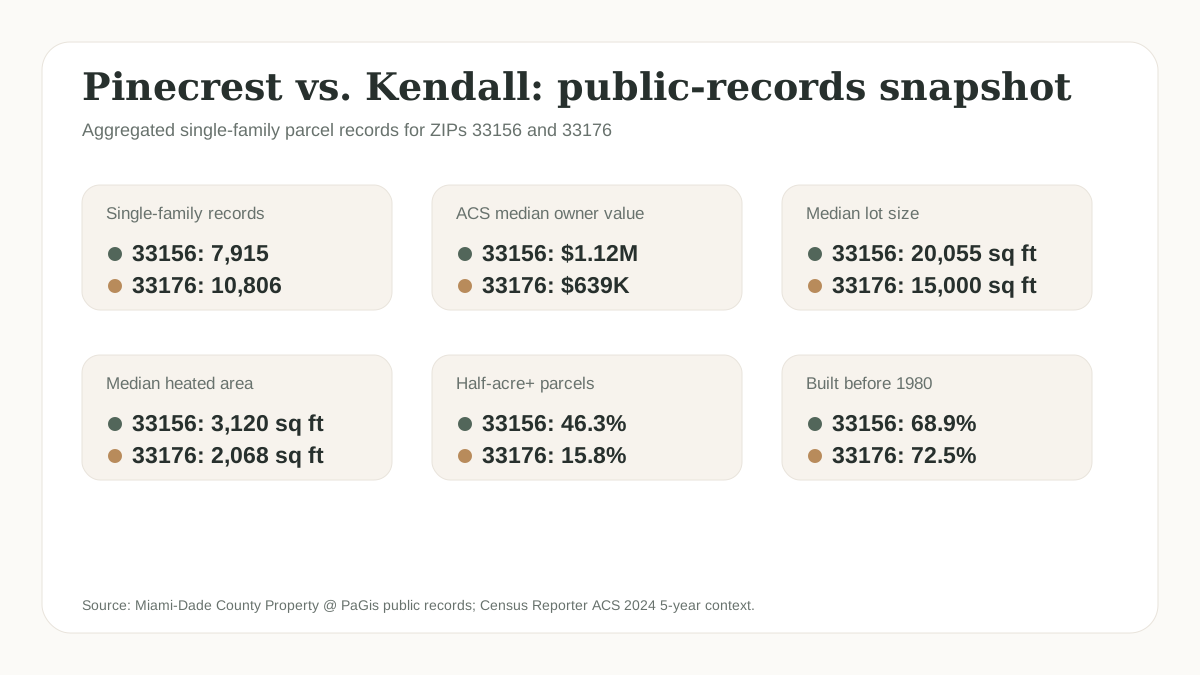
The headline: 33156 has fewer single-family records, but the typical single-family record is larger by the two physical measures buyers can see immediately. In the dataset, 33156's median lot is 20,055 square feet, versus 15,000 square feet in 33176, and its median heated area is 3,120 square feet, versus 2,068 square feet in 33176. The U.S. Census ACS 2024 5-year owner-value context points in the same direction: $1,120,100 for 33156 compared with $638,900 for 33176.
The strongest statistical split is physical: 33156 shows larger typical lots and larger heated-area homes, while 33176 has a deeper count of single-family records.
The citation-ready numbers
Use this table as the quick citation block. It is based on Miami-Dade County public records for single-family-coded parcels and Census Reporter ACS 2024 5-year context for ZIP-level owner-occupied housing value.
| Metric | 33156 | 33176 | Why it matters |
|---|---|---|---|
| Filtered single-family records | 7,915 | 10,806 | 33176 has more depth; 33156 has more scarcity. |
| Median lot size | 20,055 sq ft | 15,000 sq ft | Lot size is one of the clearest listing-story differences. |
| Median heated area | 3,120 sq ft | 2,068 sq ft | The typical 33156 record has a larger interior footprint. |
| Half-acre or larger | 46.3% | 15.8% | Large-lot positioning matters much more often in 33156. |
| One acre or larger | 9.8% | 3.1% | True estate-scale parcels are uncommon in both, but more visible in 33156. |
| Built before 1980 | 68.9% | 72.5% | Both areas need a serious prep conversation around age, systems, and disclosures. |
| Built 2015 or newer | 7.1% | 1.9% | Newer construction is a thinner slice of the inventory. |
| ACS median owner-occupied value | $1,120,100 | $638,900 | Census value is context, not a listing-price substitute. |
| ACS owner-occupied share | 73.7% | 61.7% | 33156 skews more owner-occupied by ZIP-level estimate. |
For sellers, the useful takeaway is not simply "higher" or "lower." It is that buyers are likely to judge 33156 homes through land, privacy, school-area familiarity, and estate-scale potential, while 33176 often has to win through condition, usable layout, commute logic, and pricing discipline. If you are planning a listing, Joanna's seller consultation page is where I would turn this kind of ZIP-level signal into a property-specific launch plan.
What the public records show by ZIP
The dataset uses Miami-Dade County's public Property @ PaGis layer, filtered to single-family and single-family-adjacent DOR codes in ZIPs 33156 and 33176. That produced 18,721 filtered records: 7,915 in 33156 and 10,806 in 33176.
That count difference matters. A buyer who says, "I want Pinecrest or Kendall," is not choosing between two equal inventory pools. 33176 has more single-family records in the filtered dataset, which can mean more price points, more floor-plan variety, and more comparison shopping. 33156 has fewer filtered records and a larger median home and lot profile, which can make direct comps feel more bespoke.
The value context also needs care. Miami-Dade's public property system is useful for characteristics, but the Property Appraiser warns that public records are continually edited, may not reflect the most current information, and are provided without warranty. The live GIS query used for this article returned property characteristics cleanly, but the assessment-value fields were blank for the queried records. For that reason, I used ACS owner-occupied median value as value context, not as a replacement for MLS sold data or an appraisal.
The Census housing definitions describe value as an owner estimate of how much the property would sell for, with the median dividing the series into two equal parts. That is useful, but it is not a contract price. Treat it as background evidence, then price the actual property with current comps, condition, lot utility, and buyer competition.
Lot size is the clearest seller story
The most citeable split in the study is lot size. In 33156, the median single-family lot is 20,055 square feet, which is 33.7% larger than the 15,000-square-foot median in 33176. The distribution makes the difference even clearer: 46.3% of filtered 33156 records are at least half an acre, compared with 15.8% in 33176.
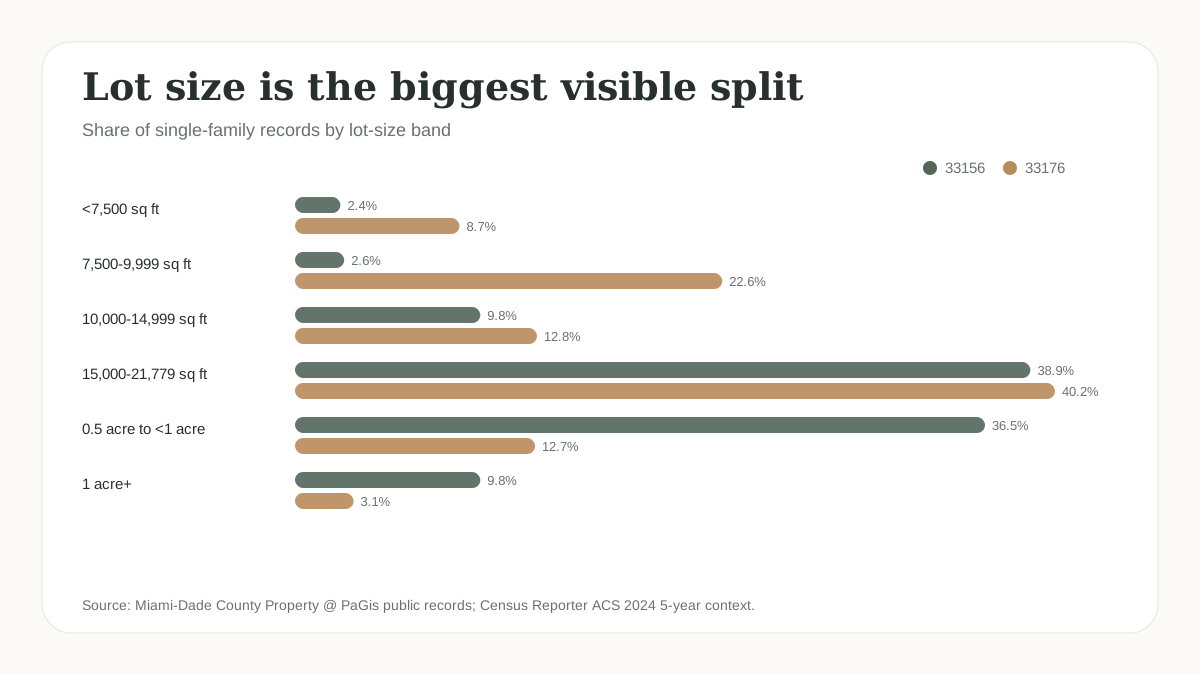 33156 has a much larger share of half-acre and one-acre-plus single-family records, while 33176 clusters more heavily below the half-acre mark.
That changes the seller conversation. A large lot is not just a number on the tax record; it affects photography, drone framing, landscape cleanup, pool-area staging, privacy language, rebuild potential, and how a buyer mentally separates the home from a smaller-lot substitute. In 33156, a seller with a well-kept half-acre or larger parcel should make land utility visible before the first showing.
In 33176, the opportunity is different. Because the median lot is smaller and the record count is deeper, the listing has to make efficiency and livability obvious. Buyers comparing homes near The Falls, Continental Park, Baptist-area commutes, or Kendall school routes may care less about estate-scale acreage and more about whether the floor plan, roof, windows, kitchen, pool, driveway, and storage feel easy to own.
A practical seller rule follows from the data: if the lot is the asset, sell the land experience; if the lot is not the asset, remove every distraction that keeps the house from feeling turnkey.
Older inventory changes the prep conversation
Both ZIPs skew older. In the public-record dataset, 68.9% of filtered 33156 records and 72.5% of filtered 33176 records were built before 1980. Newer homes are a much smaller slice: 7.1% of 33156 records and 1.9% of 33176 records were built in 2015 or later.
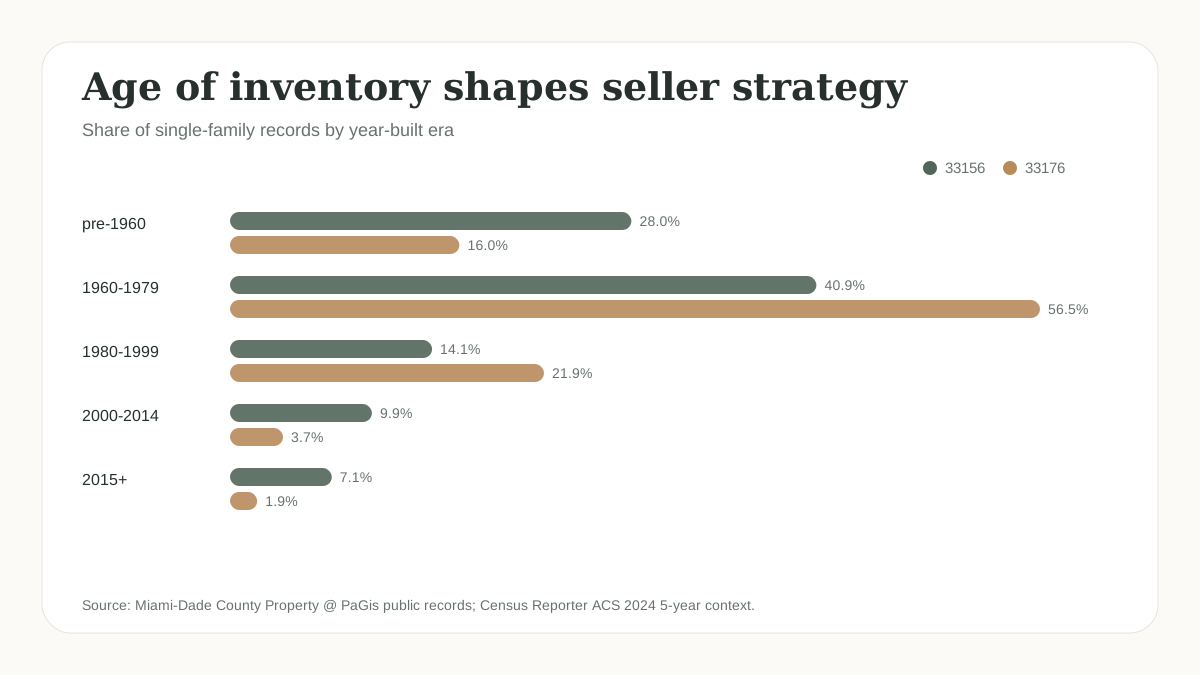 Most single-family records in both ZIPs predate 1980, so age, systems, permits, insurance questions, and update history are central to buyer confidence.
That does not mean older homes are weak. In Pinecrest and Kendall, older homes can sit on excellent lots, have better tree canopy, offer expansion potential, or already include major renovations. But age does make paperwork and presentation more important. A buyer looking at a 1960s or 1970s house is likely to ask about roof age, electrical panels, windows and doors, plumbing, drainage, permits, and insurance friction.
That is why the age distribution supports Joanna's existing seller records checklist. The best seller packet is not a pile of documents. It is a clean story: what was updated, what was permitted, what remains original, what the seller knows, and what should be verified during diligence.
For buyers, the age data argues against judging homes by cosmetic finish alone. A newer kitchen in an older shell is not the same as a systematically updated home. Ask for permit history, look at roof and opening protection, read the seller disclosure carefully, and compare insurance-sensitive features before treating two listings as equal.
How buyers should read the value context
The ACS 2024 5-year context shows a median owner-occupied value of $1,120,100 in 33156 and $638,900 in 33176. That makes the 33156 estimate 75.3% higher than the 33176 estimate. The owner-occupied share also differs: 73.7% in 33156 versus 61.7% in 33176.
Those numbers are helpful, but they are not a shortcut. ACS value is self-reported estimate data for owner-occupied housing units. ZIPs also do not match clean neighborhood boundaries. 33156 includes Pinecrest and east Kendall context; 33176 captures a broader Kendall market around The Falls and nearby residential areas. A single home can outperform or underperform its ZIP because of school assignment, lot orientation, interior condition, flood perception, street feel, or renovation quality.
The right use is directional. If a buyer is moving from outside Miami, the data explains why a 33156 search often becomes a land-and-school-area conversation, while a 33176 search often becomes a value-and-convenience conversation. If a seller is preparing to list, the data helps decide which asset to lead with: land, size, condition, renovation history, or location efficiency.
Methodology and limits
This study uses public data, but it should be read with professional caution.
The parcel portion filters Miami-Dade County Property @ PaGis records to ZIP codes beginning with 33156 or 33176 and DOR codes 0101, 0102, 0105, 0176, and 5001. Those codes capture single-family and closely related residential records. I did not export owner names or addresses into the published dataset; the point is aggregate market context, not individual-property exposure.
The value context comes from Census Reporter's ACS 2024 5-year API for tables B25077, B19013, B25003, and B25001. Census value is a useful comparison point because it comes from a public statistical program, but it is not current MLS sold-price data. Margin of error also matters: the ACS estimate for 33156 median owner value has a reported margin of error of $60,881, and 33176 has a reported margin of error of $37,164.
School context should also be verified by address. The official Miami-Dade school lookup asks users to enter a street address and ZIP code to identify assigned schools and programs. A ZIP-level school list can orient a relocation conversation, but it cannot prove assignment for a specific house.
In short: cite the aggregate patterns, then verify the property.
How to use this data before you list or buy
If you are selling in 33156, start by deciding whether your land, scale, renovation history, or school-area appeal is the lead story. The data suggests land and size often deserve more attention than generic luxury language. A half-acre-plus parcel should not be photographed as if it were just a house with a yard.
If you are selling in 33176, assume buyers have more comparison points. That makes condition, pricing, prep, and documentation especially important. A clean inspection story, a thoughtful launch price, and an easy explanation of updates can matter as much as headline square footage.
If you are buying, use the numbers to ask better questions. Why is this lot smaller or larger than the ZIP median? Is the heated area functional or just big? Is the home older but deeply updated, or newer but compromised? Does the value make sense after insurance, roof, windows, drainage, school assignment, commute, and renovation risk are considered?
For a property-specific read, start with the broader Joanna Jimenez insights library and then compare your home or target listing against current active, pending, and sold data. Public records can frame the conversation. A local pricing strategy still has to happen one address at a time.
This article is educational market commentary, not legal, tax, appraisal, insurance, or investment advice. Public records and school assignments can change; confirm details with the official source and qualified professionals before making a real estate decision.
Selling in ?
Get a free valuation or explore seller services in your area.